Cubic Yard Calculator
Accurately calculate cubic yards, cubic feet, tonnage, and store bag counts for mulch, soil, gravel, and concrete projects.
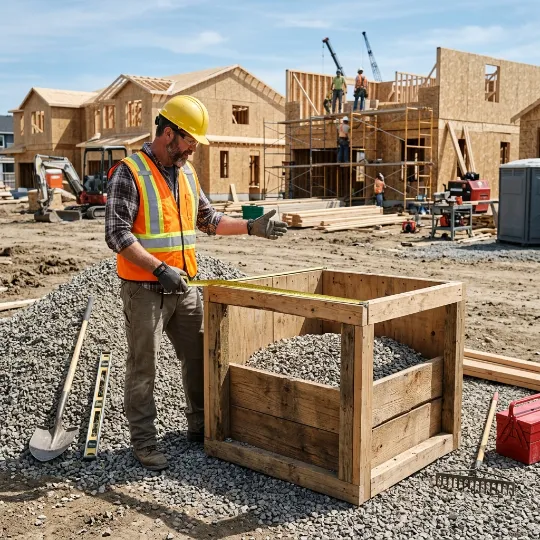
What is a Cubic Yard?
A cubic yard (yd³) is an imperial and US customary unit of volume measurement equal to the space inside a cube whose dimensions are each 1 yard (3 feet, or 36 inches) in length, width, and height.
Because surface areas are commonly measured in feet while application depth or slab thickness is measured in inches, converting accurately to cubic yards prevents costly under-ordering or excessive delivery surcharges for bulk mulch, topsoil, sand, stone, and ready-mix concrete.
Standard Conversion Equivalents: 1 Cubic Yard = 27 Cubic Feet = 46,656 Cubic Inches = 0.7645 Cubic Meters = ~200 Gallons.
How to Calculate Cubic Yards
Follow three simple steps to calculate exact material quantities and avoid ordering shortfalls.
Choose rectangular beds, circular rings, or triangular corners. Input dimensions in your preferred unit (feet, yards, inches, or meters).
Input depth in inches. Add an optional 5% to 15% waste margin to account for grading irregularities, material settling, and ground slope.
Review your total volume in cubic yards and cubic feet, total estimated tonnage for haulage, and exact pre-bagged counts for retail pickup.
Cubic Yard Calculator Formulas
Use these proven mathematical formulas to calculate volume accurately across any project geometry.
For driveways, standard garden beds, footings, and rectangular patio slabs.
For circular planters, fire pit surroundings, and round sonotube concrete piers.
For angled lawn borders, corner landscape beds, and triangular paving slabs.
Related Calculators
Explore more structural, framing, and architectural measurement tools.
What Our Users Say About Us
Trusted by over 12,000 users worldwide for accurate material estimates.
"Accurately estimated the 6 cubic yards of mulch I needed for our flower beds. Didn't waste money ordering extra."
"The 10% waste buffer was spot on for our patio pour. Straightforward layout, worked well on my phone."
"Instant calculation of tons alongside yards gave my supplier the exact tonnage for gravel delivery. Saved money and time."
"Calculations are accurate. Took a minute to realize depth defaults to inches while length is in feet, but easy once you notice."
"I use this tool frequently to quote customer flagstone gravel bases directly on-site. Very dependable."
"The circular mode worked fine for our ring border, though I'd love to see a hollow ring option in future updates."
"Accurately estimated 4.5 yards of topsoil for our lawn leveling project. The weight estimation helped verify my trailer payload."
"The copy summary button is very convenient. I clicked copy and texted the yardage and bag counts directly to my supplier."
"Clean, fast, and completely free of annoying ads or popups. Best yardage calculator available on the web."
Frequently Asked Questions
Find quick, authoritative answers to common volume, dimension, and conversion questions.
- 1 inch deep: 324 square feet
- 2 inches deep: 162 square feet
- 3 inches deep: 108 square feet
- 4 inches deep: 81 square feet
Have questions about bulk material estimates, irregular excavations, or contractor delivery volumes? Reach out to our calculation team.
Contact Us